
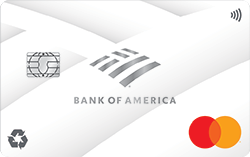
BankAmericard vs U.S. BANK SHIELD
Compare fees, current offers, and listed rewards. Add your preferences to see which card may fit better.
U.S. BANK SHIELD leads on the listed facts.
U.S. BANK SHIELD leads on 2 of 4 headline comparisons: annual fee, estimated welcome bonus, highest listed earn rate, and annual listed credits. This is a starting point; category restrictions and the benefits you actually use can change the better fit.
Best if you care most about stronger category earning on everyday spend.
Best if you want a stronger international-travel setup with no foreign transaction fee.
This comparison has not assessed your spending or eligibility. Listed credits are potential benefits, not savings; earn-rate caps and redemption choices can change their value.
What leads on the listed facts
- U.S. BANK SHIELD wins 2 of 4 comparison categories in CardCurator's quick verdict model.
- Top earn rate: U.S. BANK SHIELD reaches 4x; BankAmericard reaches 1x.
- Annual fee: U.S. BANK SHIELD is no annual fee; BankAmericard is no annual fee.
- Current public bonus values: BankAmericard ~$0; U.S. BANK SHIELD ~$0.
Headline comparison · not personalized
This comparison has not assessed your spending or eligibility. Listed credits are potential benefits, not savings; earn-rate caps and redemption choices can change their value.
Why you can trust this answer
CardCurator compares measurable card economics first, then uses deeper rewards intelligence from program data, transfer partners, award charts, and live bonuses when a decision depends on the ecosystem behind the card rather than the card headline alone.
Personalize this answer without sharing sensitive data
Start with a few signals that usually decide close matchups: rough monthly spend, your top category, annual-fee tolerance, and whether you already hold either card.
This step is meant to break close ties without asking for uploads, account creation, or exact spending data.
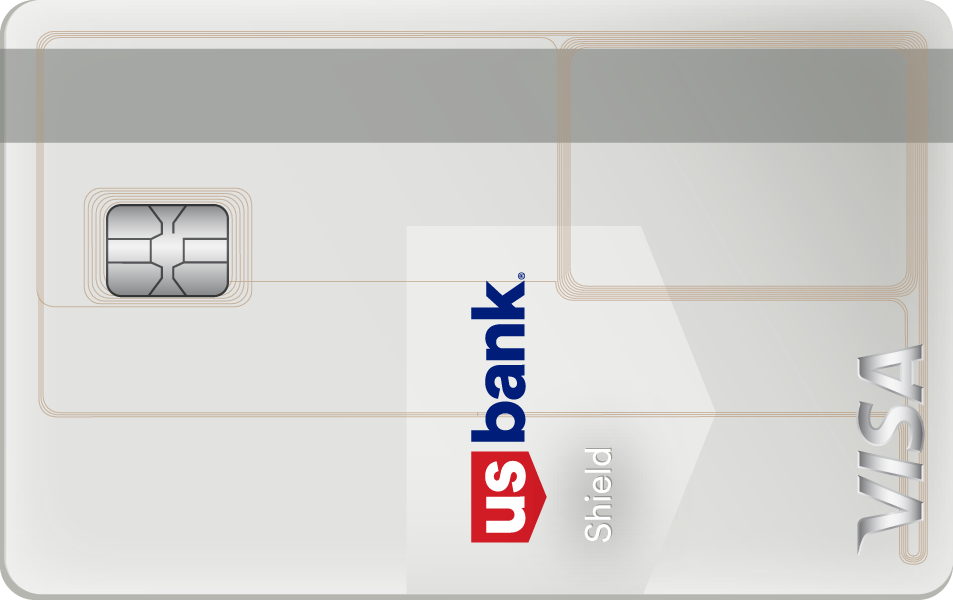
U.S. BANK SHIELD
Assumptions: default assumptions
No personal inputs have been applied. Add your spending focus, fee preference, or current cards to explore how the comparison changes.
- Prepaid air, hotel, and car reservations booked through U.S. Bank Rewards Center 4x
- Purchase Milestone Credit $20
Quick summary
A short version of the comparison with the main differences at a glance.
U.S. BANK SHIELD leads on 2 of 4 headline comparisons: annual fee, estimated welcome bonus, highest listed earn rate, and annual listed credits. This is a starting point; category restrictions and the benefits you actually use can change the better fit. On raw upside, U.S. BANK SHIELD tops out at 4x versus 1x for BankAmericard. Current signup bonus values are roughly $0 for BankAmericard and $0 for U.S. BANK SHIELD. Summary generated May 8, 2026. Source: https://cardcurator.ai/compare/bankamericard-vs-u-s-bank-shield
- U.S. BANK SHIELD wins 2 of 4 comparison categories in CardCurator's quick verdict model.
- Top earn rate: U.S. BANK SHIELD reaches 4x; BankAmericard reaches 1x.
- Annual fee: U.S. BANK SHIELD is no annual fee; BankAmericard is no annual fee.
- Current public bonus values: BankAmericard ~$0; U.S. BANK SHIELD ~$0.
Common Questions: BankAmericard vs U.S. BANK SHIELD
Is the BankAmericard or U.S. BANK SHIELD better for dining?
Neither card offers a specific dining bonus — both earn their base rate on restaurant purchases.
Which has the higher signup bonus in 2026?
Neither card has a current public signup bonus. Check the issuers' sites for any targeted offers.
Which card is better for international travel?
BankAmericard: no foreign transaction fee listed. U.S. BANK SHIELD: 3% foreign transaction fee. Check the issuer's current terms before using a card abroad.
Can I hold both the BankAmericard and the U.S. BANK SHIELD?
In most cases yes — holding both is allowed and can be a smart strategy for maximizing rewards across different spending categories. BankAmericard is from Bank of America and U.S. BANK SHIELD is from U.S. Bank, so they're governed by separate bank policies.
Keep Researching
If this matchup is close, the stronger next step is usually to read the full card reviews or use a broader ranking page instead of comparing random pairs one by one.