
Chase Ink Business Premier vs IHG One Rewards Premier Credit Card
Side-by-side comparison of fees, rewards, benefits, and transfer partners.
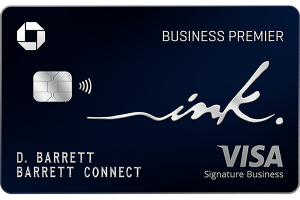
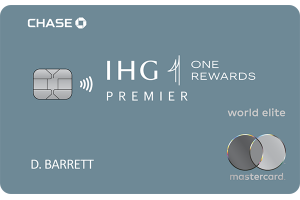
- Travel 3x
- Shipping 3x
- Advertising 3x
- IHG Hotels and Resorts 10x
- Travel 5x
- Dining 5x
- Annual Chase Travel Credit $100
- Statement Credit $100
- Statement Credit $120
- Statement Credit $50
- 4th award night free
- Platinum Elite Status
- 100 Statement CreditAfter $20,000 spend
- 10000 pointsAfter $20,000 spend
- Virgin Atlantic Flying Club
- Aer Lingus AerClub
- Air Canada Aeroplan
- British Airways Executive Club
- Flying Blue
- +9 more
Common Questions: Chase Ink Business Premier vs IHG One Rewards Premier Credit Card
Is the Chase Ink Business Premier or IHG One Rewards Premier Credit Card better for dining?
Chase Ink Business Premier earns 2x on dining; IHG One Rewards Premier Credit Card earns 5x on dining. IHG One Rewards Premier Credit Card wins for dining.
Which has the higher signup bonus in 2026?
Chase Ink Business Premier currently offers 100,000 pts signup bonus (spend $10,000 in 3 months). IHG One Rewards Premier Credit Card offers 175,000 pts signup bonus (spend $5,000 in 3 months). Chase Ink Business Premier has the larger bonus.
Which card is better for international travel?
Both cards charge no foreign transaction fees, making either a solid choice for international travel.
Can I hold both the Chase Ink Business Premier and the IHG One Rewards Premier Credit Card?
In most cases yes — holding both is allowed and can be a smart strategy for maximizing rewards across different spending categories. Both cards are from Chase, so check their specific application rules.